Why Fall Is the Best Dog Park Season in the DMV area (And How to Use It)
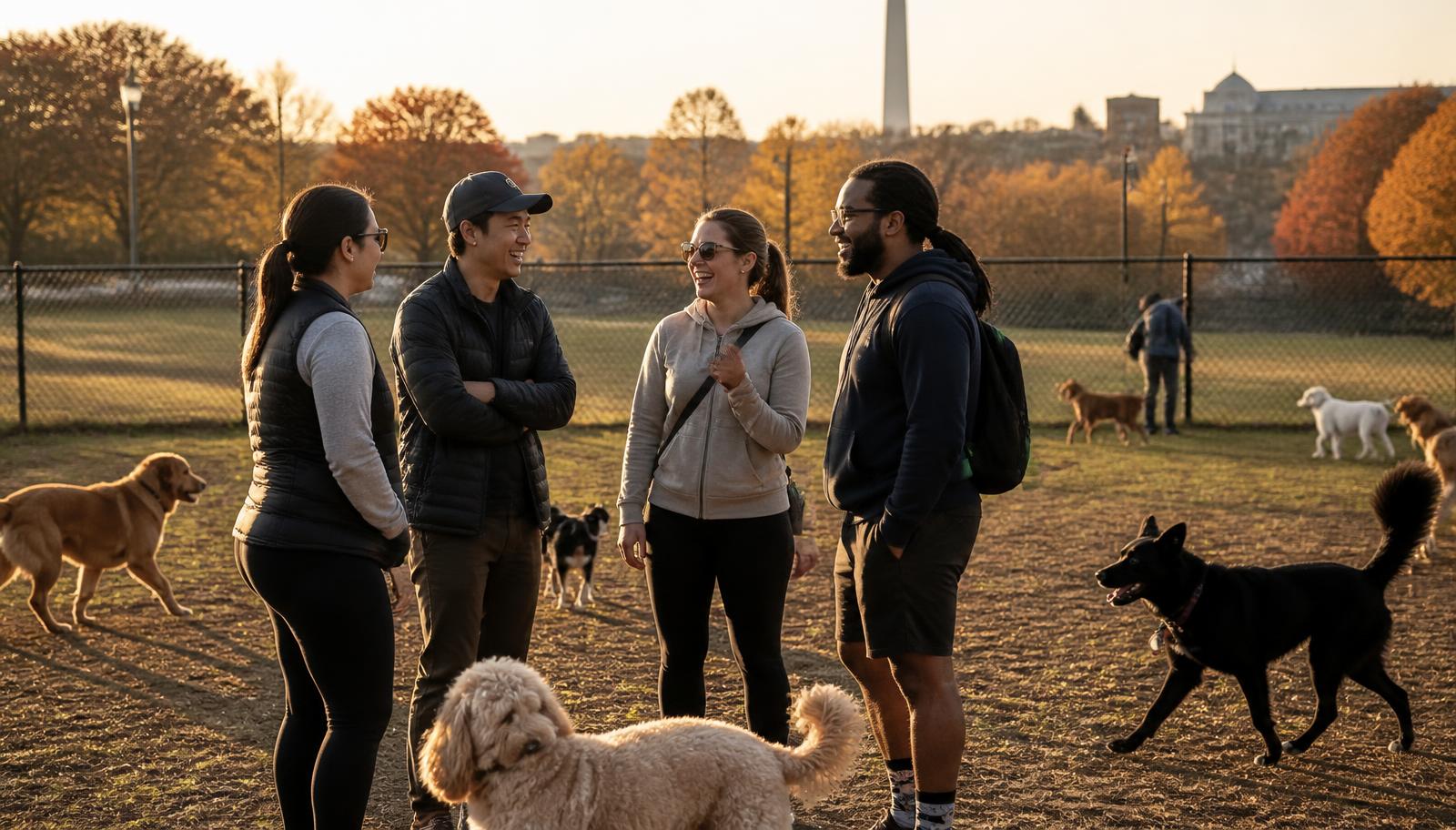
Everybody in the DMV area talks about spring like it's the good season. Cherry blossoms, patios, the whole thing. But ask anyone who takes a dog to a park four or five times a week and they'll tell you the truth: fall is the best dog park season we get, and it's not close.
The humidity finally breaks somewhere around the second week of September. The ground firms up. The bugs calm down. Dogs that spent August lying on the kitchen tile like a dropped towel suddenly want to run for forty minutes. And the parks fill back up with the regulars you haven't seen since June, because everyone quietly gave up on summer at the same time.
Here's how to get the most out of the next three months, from someone who has stood in a lot of Northern Virginia and Maryland dog parks in a fleece.
September: the reset month
September in the DMV area is basically two seasons wearing one coat. The first two weeks can still throw a 92-degree Thursday at you. The last two weeks are perfect.
This is the month to go back to the parks you abandoned in July — the wide open ones with no shade that were unusable all summer. Places like South Run in Springfield or Chandon Park in Sterling are miserable in August heat and genuinely great in late September, when there's a breeze and the grass has recovered.
It's also the month everybody's schedule resets. Kids are back in school, work trips start again, and the park crowd shifts back to a predictable weekday rhythm. If you've been meaning to figure out who the regulars are at your local park, now is the window — check the Right Now feed on your park's page and you'll see the same names start clustering around the same hours again.
Go when: evenings. Sunset is still after 7pm for most of the month, and 6:30 to 7:30 is the sweet spot for both temperature and company.
October: the peak
October is the whole reason to live here.
Fifty-five in the morning, seventy in the afternoon, the leaves going at Cabin John and Wheaton and along Four Mile Run. Dogs run harder in this weather than any other time of year — a cool, dry 60 degrees is roughly a dog's ideal operating temperature, and you'll see it in how much longer play sessions last before anybody taps out.
A few things worth knowing:
Leaf cover hides everything. Broken glass, chicken bones, holes, other people's uncollected messes. It's the one real downside of a beautiful October park. Walk the perimeter of a new-to-you park before you unclip, and keep an eye on the dog that likes to eat things.
The mud lies. A DMV October rain plus a thick leaf mat equals a park that looks dry on the surface and turns into a skating rink underneath. This is exactly what the Mud Factor reports on each park page exist for — thirty seconds of checking before you drive twenty minutes.
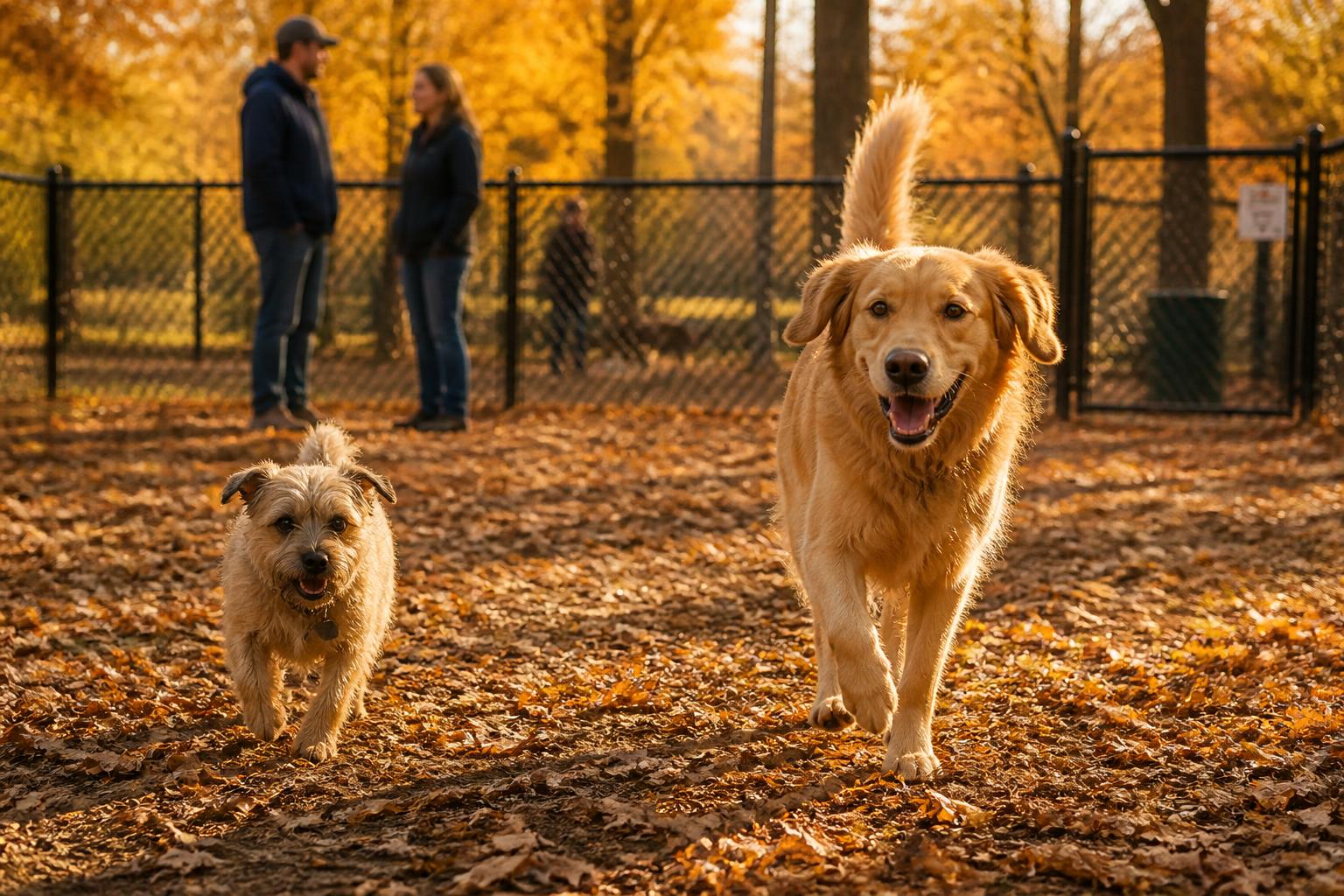
This is peak photo season. Golden hour in a park full of yellow maples makes every dog look like it has an agent. Post them to your park's photo feed; the fall shots are the ones people actually scroll.
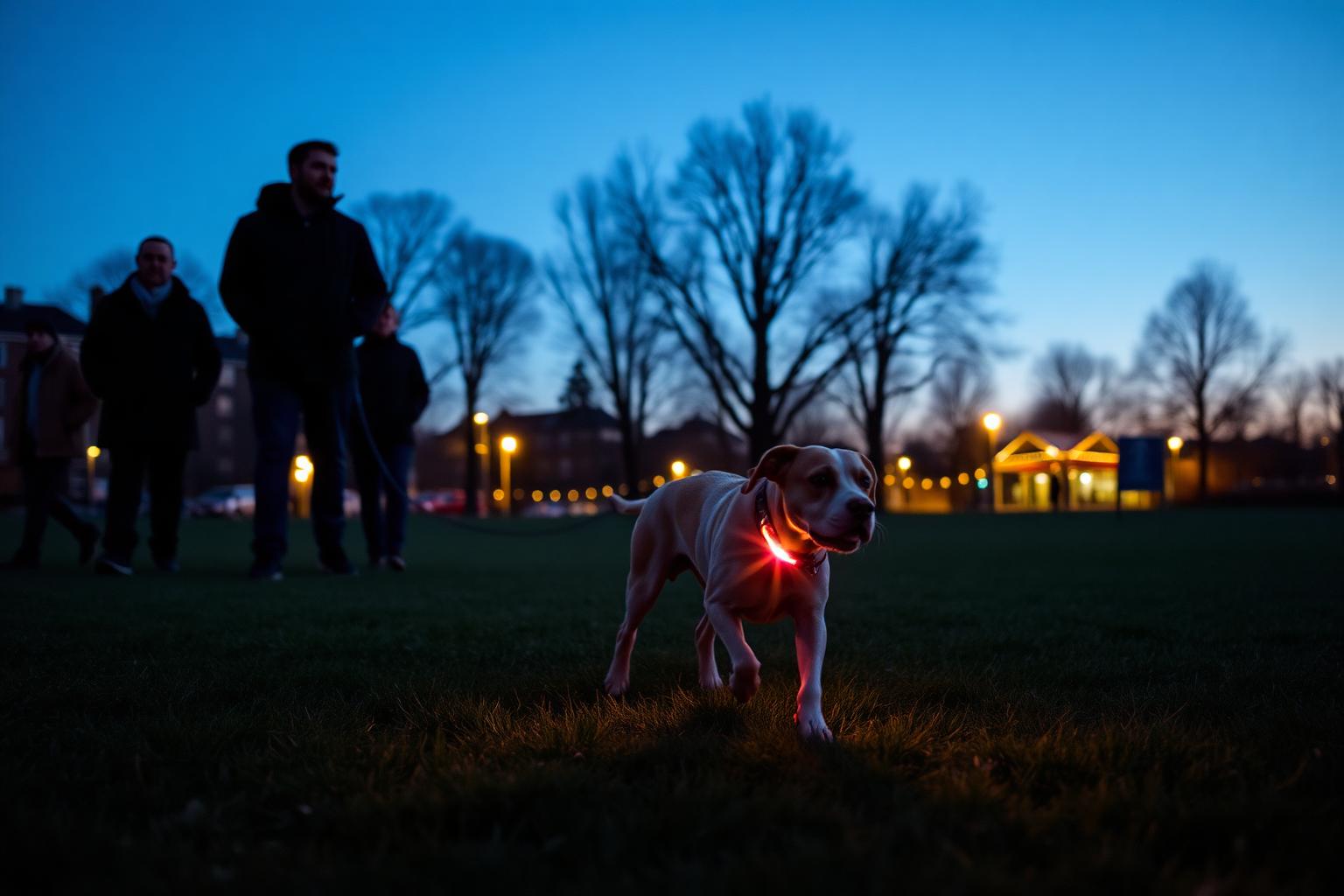
November: the dark shift
Then daylight saving ends, and at 5:15pm it's night.
This is the single biggest disruption to DMV area dog park life all year, and most people handle it badly — they just stop going. Their dog gets restless, they get out of the habit, and by January they've drifted out of their park community entirely.
Don't do that. Adjust instead:
- Find your lit parks. Not many DMV area off-leash areas have real lighting, but the ones near lit athletic fields, parking lots, or trails are usable well past dark. Ask the regulars; they know which corner stays bright.
- Buy a clip-on collar light. Five dollars, and it's the difference between watching your dog and squinting into a black field. Get a different color than everyone else so you can tell yours apart.
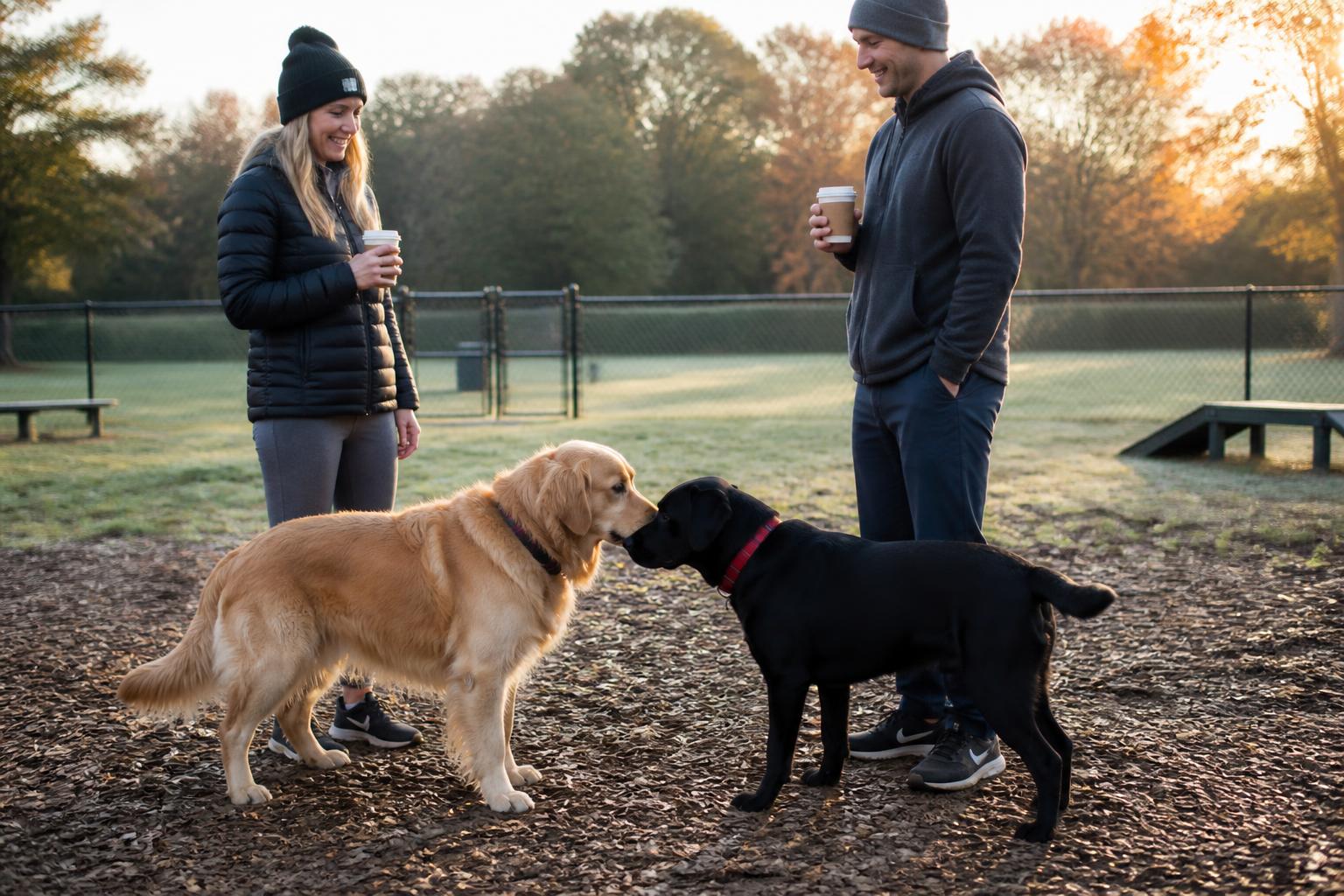
- Move to mornings. Sunrise is around 6:45 in November. Morning park crowds are smaller, calmer, and weirdly friendlier than evening ones.
- Shift your weekends. With short days, Saturday and Sunday mid-mornings become the main social event of the week. This is when meetups actually work — schedule one and people show up.
The fall stuff nobody warns you about
Ticks do not care that it's cold. This is the big one. Deer ticks in the mid-Atlantic are active in fall and stay active through mild winter days — October and November are genuinely a peak activity window here, not an off-season. Keep prevention going year-round and run your hands over your dog after any park visit that involved tall grass or leaf litter. Ears, armpits, groin, between toes.

Fall allergies are real for dogs too. Ragweed peaks here from late August into October. If your dog starts chewing its paws, scratching its face, or getting goopy eyes in September, that's often seasonal — worth a vet conversation, not a mystery.
Acorns and black walnuts. Both are all over DMV area parks in the fall and both are a bad idea for a dog to chew on. Acorns in quantity can cause stomach trouble; moldy walnuts are worse. If your dog is an indiscriminate mouth-first type, pick a park with fewer oaks.
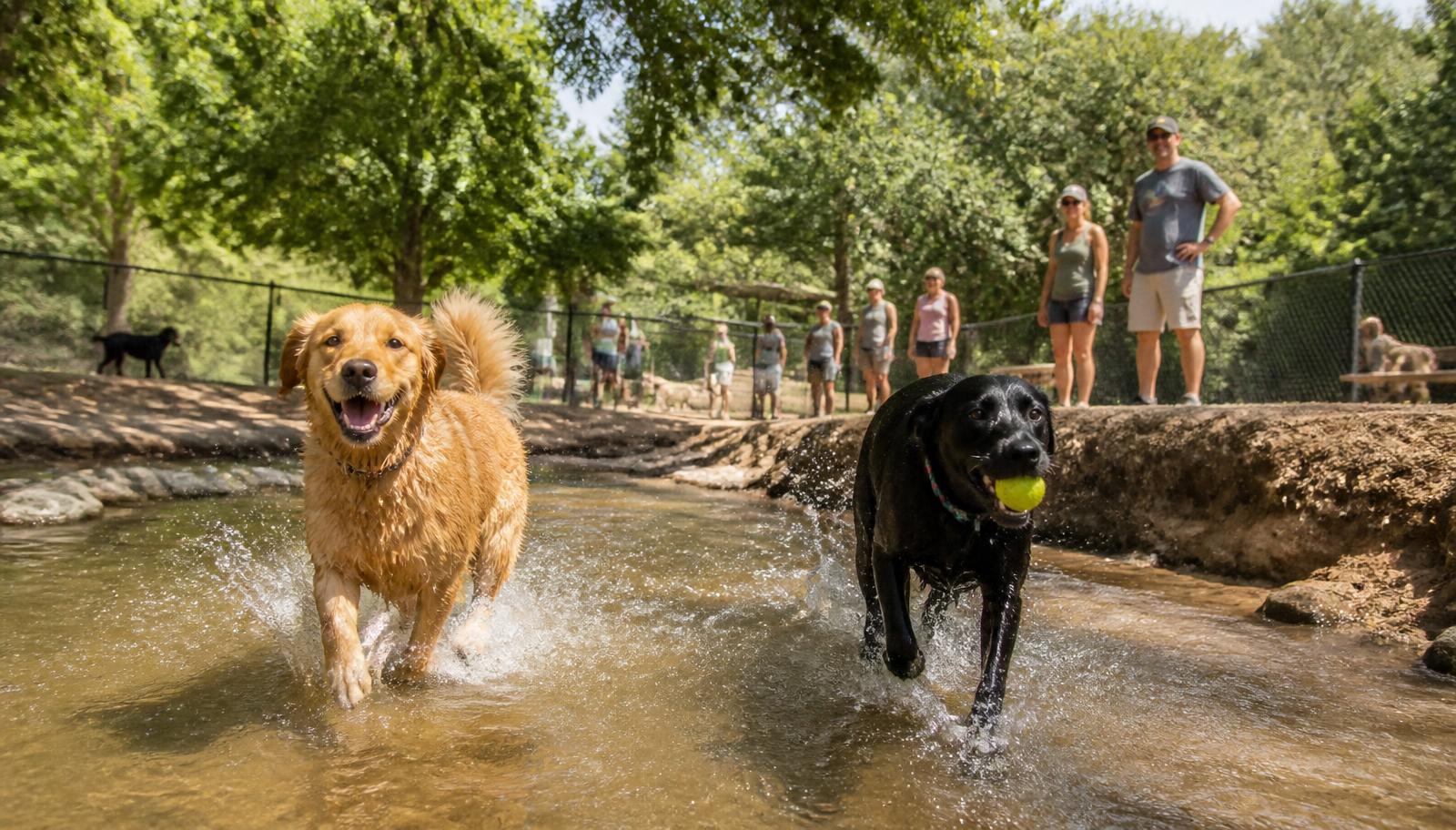
Cold water hits different now. That creek your dog charged into all summer is a lot colder in November, and a soaked short-coated dog in a 45-degree wind gets miserable fast. Bring a towel, or steer them away from the water.
Short-coated and senior dogs need more warm-up. Ten minutes of walking before hard play saves a lot of pulled muscles once the temperature drops. Older dogs especially — cold stiffens joints, and the dog that's happy to sprint at 70 degrees can hurt itself doing the same thing at 38.
Fall parks worth the drive
- Cabin John Regional Park, Bethesda — the tree cover that made it the best summer park makes it the best foliage park too. Peak color usually mid-to-late October.
- Shirlington Park, Arlington — the Four Mile Run corridor turns gorgeous, and the crowd is at its best in fall. Bring shoes you don't love; the creek bank gets sloppy after rain.
- Wheaton Regional Park, Silver Spring — big enough that a cool, dry day turns into a proper long session. Montgomery County's free off-leash permit is required, so sort that out before you go.
- Baron Cameron Park, Reston — wide open, breezy, and much more pleasant in October than it ever is in July.
- Grist Mill Park, Alexandria — big running room and river air, and it drains better than most after a fall rain.
- Olde Izaak Walton Park, Leesburg — worth the drive for one crisp Saturday morning in late October if you like your dog park with a view.
Use the season to build your park community
Here's the honest reason fall matters more than the weather: it's the easiest three months of the year to become a regular somewhere.
People are outside, they're not miserable, and they've got time before the holidays swallow December. Go to the same park at the same time twice a week for a month and you will know six dogs by name and at least three humans. That's how the whole thing works — it isn't an app feature, it's just showing up on a schedule.
What the site does is make that easier: check in so your regulars know you're there, post conditions so nobody wastes a trip, add your dog so people can put a name to the face they already recognize, and set up a meetup for a Saturday morning in October when the weather is doing all the work for you.
Then go outside. We've got about twelve good weeks. Don't spend them scrolling.
Find a fall park near you
- Fairfax County dog parks
- Arlington County dog parks
- Montgomery County dog parks
- Loudoun County dog parks
- Browse every DMV city and county hub to find the closest one to your neighborhood.
Frequently asked questions
- When is the best time of year to visit DMV area dog parks?
- Fall, specifically late September through October. Humidity breaks, temperatures sit in the 55-70 degree range that dogs run best in, and the ground firms up after summer. October is the peak month across DC, Maryland, and Northern Virginia.
- Are ticks still a problem at dog parks in the fall?
- Yes. Deer ticks in the mid-Atlantic are active through fall and on mild winter days, and October and November are a peak activity window here — not an off-season. Keep prevention going year-round and check ears, armpits, groin, and between toes after any visit involving tall grass or leaf litter.
- How do I keep taking my dog to the park after daylight saving ends?
- Switch to morning visits around sunrise, use parks near lit athletic fields or parking lots, buy a clip-on LED collar light so you can track your dog in the dark, and move your main social visits to weekend mid-mornings.
- Which DMV area dog parks are best in the fall?
- Cabin John Regional Park in Bethesda and Wheaton Regional Park in Silver Spring for foliage, Shirlington Park in Arlington for the Four Mile Run corridor and its regulars, Baron Cameron Park in Reston and Grist Mill Park in Alexandria for wide-open crisp-day running, and Olde Izaak Walton in Leesburg for a scenic October morning.
- Are acorns dangerous for dogs at the park?
- In quantity, yes — acorns can cause stomach upset, and moldy black walnuts are worse. Both are common in DMV area parks in the fall, so if your dog mouths everything, choose a park with fewer oaks and walnuts or keep a close eye during leaf season.
- Why does fall mud sneak up on you at DMV area dog parks?
- A thick leaf mat hides saturated ground, so a park can look dry on the surface and be slick underneath after autumn rain. Check the crowd-sourced Mud Factor report on the park's page before you drive over.