DMV Dog Park Etiquette: A First-Timer's Guide
The first time I took my dog to a real off-leash park, I did almost everything wrong. I brought a squeaky ball. I walked in through the gate with him already off the leash. I stood in the corner staring at my phone. And when a big goofy shepherd came bounding over, I did the thing every new dog owner does at least once — I picked my dog up. Which, if you've never seen it, is a fantastic way to turn one curious dog into five very interested dogs.
Nobody yelled at me. A woman with a gray-muzzled beagle just walked over, said "hey, he's fine, put him down," and stayed next to me for ten minutes while I figured out how to breathe. That's the DMV dog park experience in a nutshell, honestly. Mostly kind people, a few unspoken rules, and a learning curve nobody warns you about.
So here's the guide I wish I'd had. Not the sanitized park-sign version — the real one.
Before You Even Get Out Of The Car
Sit for a second and watch through the windshield. Seriously. Thirty seconds of watching tells you more than any review ever will.
How many dogs are in there? What's the energy like — loose, wiggly play, or one dog getting chased into a fence by three others? Are the humans spread out and paying attention, or clustered at a picnic table with their backs to the action?
If it looks like too much, it's okay to drive away. That's not failure. Around here you're usually ten minutes from another park, and there's zero prize for toughing out a bad session. I've turned around at Shirlington on a Saturday more times than I've stayed.
The Gate Is The Whole Game
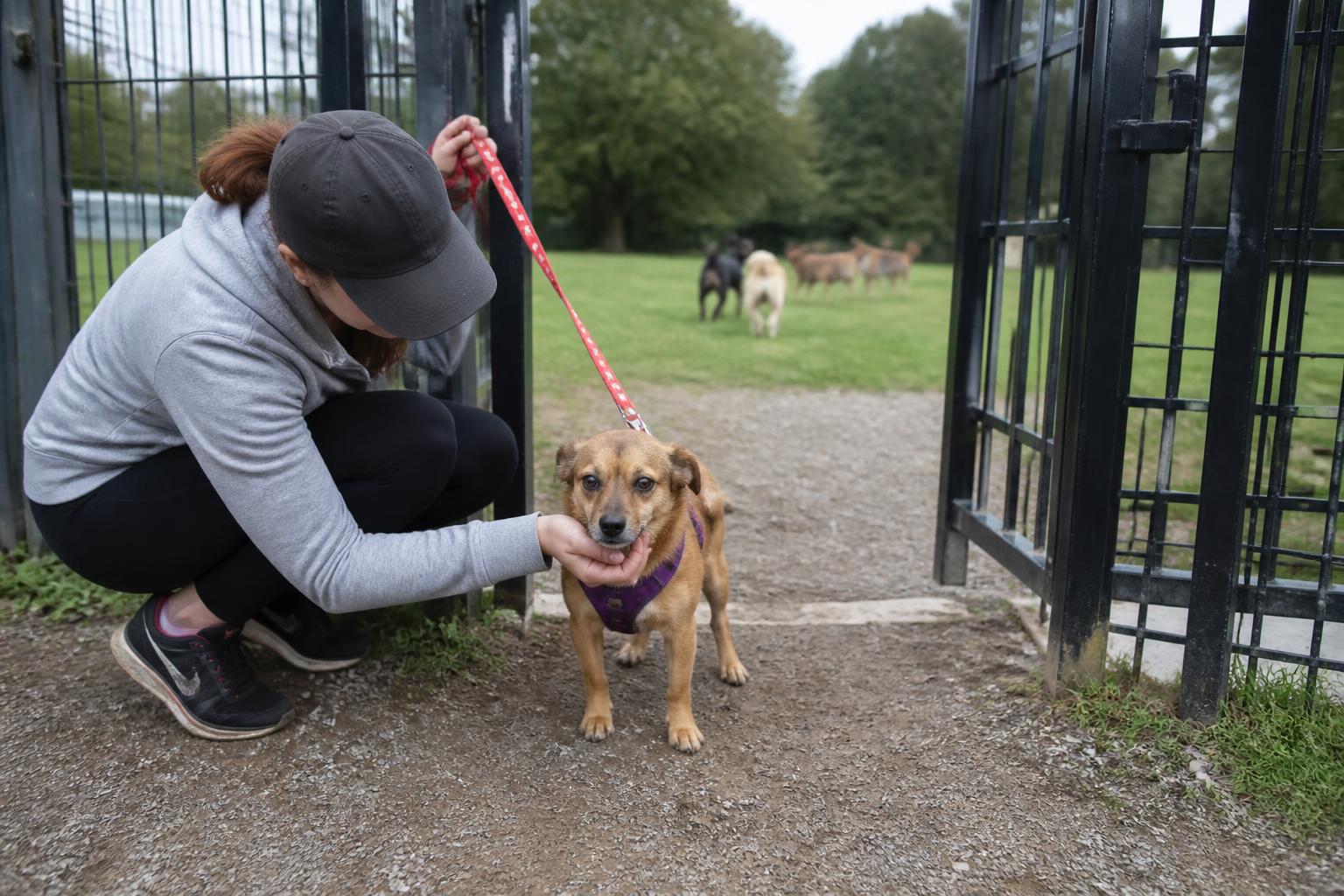
If there's one thing to take from this entire post: leash on going through the gate, leash off the second you're inside — then move.
The double-gate area is the single most tense square footage of any dog park. It's a bottleneck, dogs get crowded, and leashed dogs next to unleashed dogs is a recipe for a snap. So don't stand there. Don't chat there. Get in, unclip, walk toward the open middle of the park, and let your dog do their greeting in space where they can actually leave if they want to.
And if you're already inside and someone's coming in? Call your dog over to you. That one move — recalling your dog away from the gate — is the mark of somebody who knows what they're doing, and the newcomer will silently love you for it.
Put The Phone Down (Mostly)
I'm not going to pretend I never look at my phone at the park. But there's a difference between glancing at a text and scrolling for twenty minutes while your dog does something you'll only hear about later.
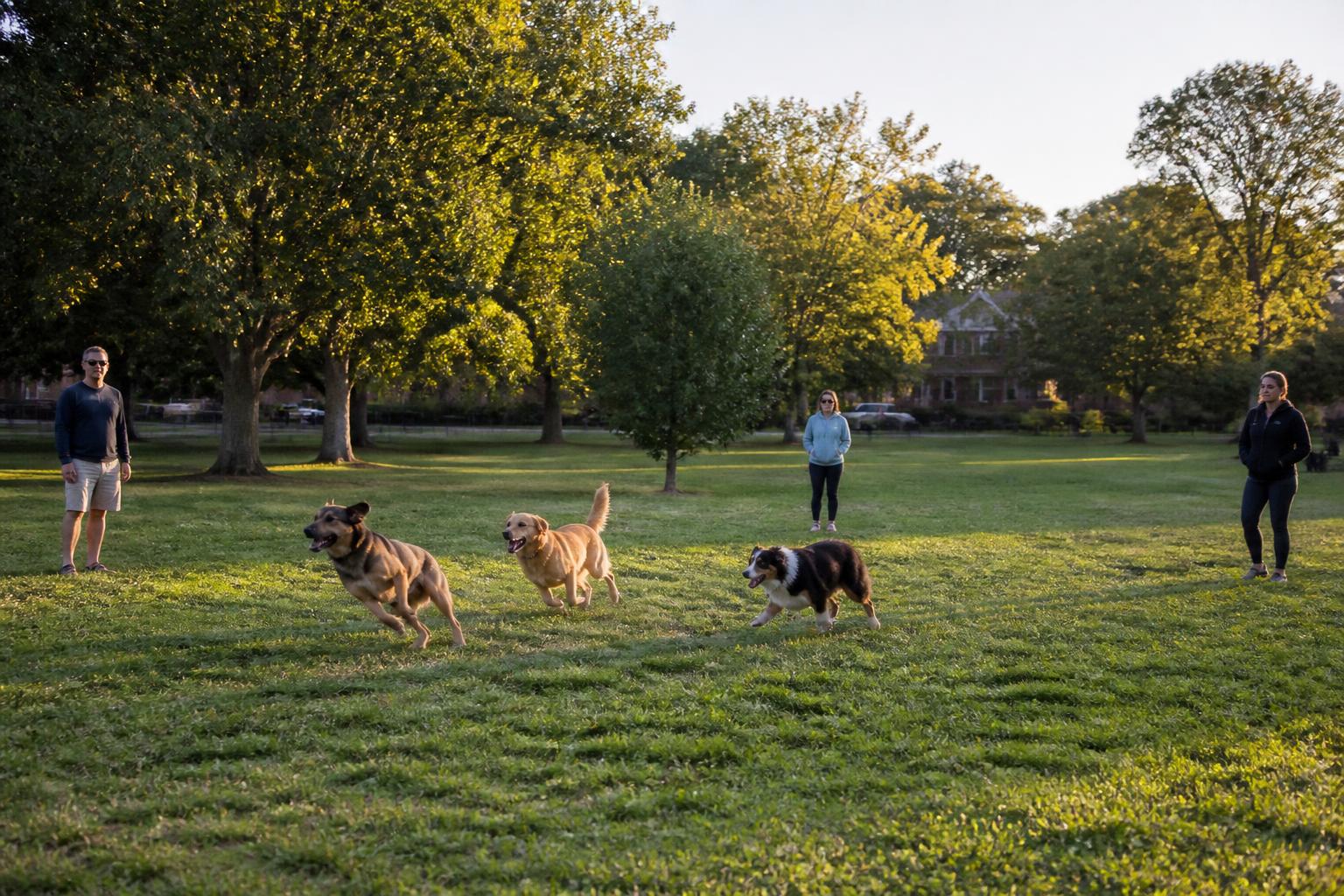
Watch your dog. Not with white-knuckle anxiety — just casually, the way you'd keep half an eye on a toddler at a playground. You're looking for a few specific things:
- Loose, bouncy, exaggerated movement = good play. Play bows, silly running, taking turns chasing.
- Stiff body, hard stare, tail up and rigid, one dog not getting a break = time to interrupt.
- Your dog hiding behind you, tail tucked, tongue flicking, trying to leave = they've had enough, and staying "so they get used to it" doesn't work. It just teaches them the park is scary.
Interrupting isn't a big dramatic thing. Just call your dog, walk twenty feet away, let everybody's brain reset for a minute. Nine times out of ten play starts back up better than before.
The Toy And Treat Problem
Bringing a tennis ball to a busy park is like bringing one slice of pizza to a party. Somebody is going to have feelings about it.
Some dogs guard toys. Some dogs get so ball-obsessed they'll body-slam anything between them and it. If the park is quiet and it's just you, throw the ball. If there are eight dogs, leave it in the car.
Treats are the same deal. High-value food in your pocket at a crowded park means you're about to be the most popular and most mobbed person there. Keep a couple of small, boring treats for recall if you need them, and don't hand out food to dogs that aren't yours — allergies, resource guarding, and owners who are mid-training will all thank you.
Yes, You Have To Pick It Up
Every single time. Even if it's raining. Even if it's in the back corner where nobody saw. Even if you're pretty sure someone else's dog did it.
Bring your own bags — park dispensers around here are empty about half the time, and I've watched more than one otherwise-nice person shrug and walk away because they came unprepared. Two bags in your pocket, always. It's the cheapest way to be a good neighbor.
The Mud Thing (Welcome To The DMV)
Our parks turn into soup. Four Mile Run, the low spots at Chambliss, half of the Maryland parks after a summer thunderstorm — if it rained in the last 48 hours, assume mud.
This is genuinely why the Mud Factor reports on this site exist. Somebody checks in, taps how bad it is, and everybody else knows whether to bring the towel or pick a different park. It takes five seconds and it's the single most useful thing you can do for your local dog park community.
For the record, the veteran DMV trunk setup: an old towel, a gallon jug of water, and a cheap blanket over the back seat. Ask me how I learned.
Talk To People. Really.
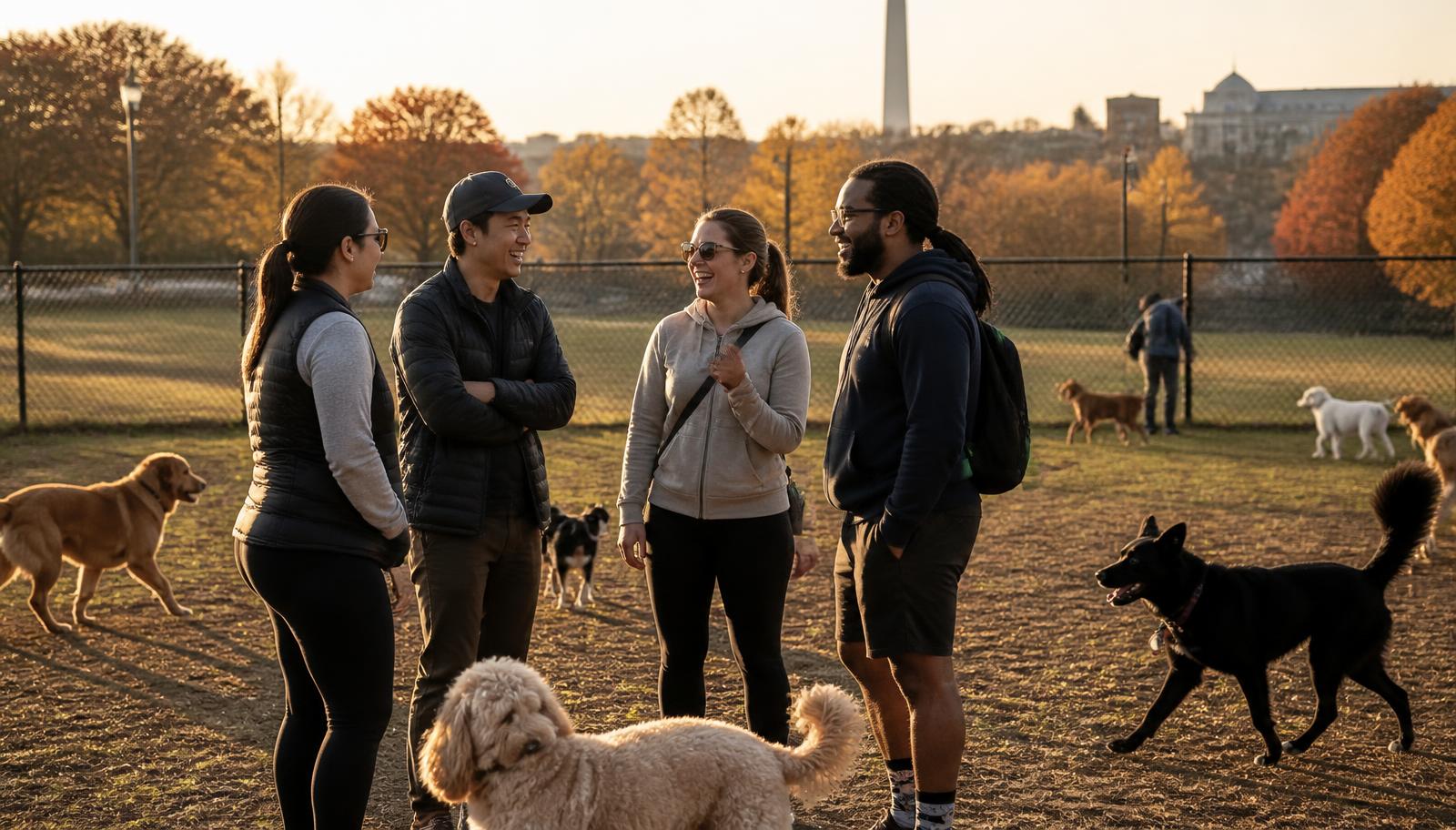
Here's the part that surprised me most: the dog park turned into my actual social life.
Not immediately, and not because I tried hard. It happened because I started going at the same time on the same days, and eventually you learn that the guy with the two huskies works nights, and the woman with the beagle has been coming for nine years, and somebody's always got an extra bag when you forgot yours.
If you're new to the area — and a lot of people in the DMV are new to the area — this is one of the fastest, lowest-pressure ways to actually meet your neighbors. You already have something to talk about. It's standing right there eating a stick.
Say hi. Ask the dog's name (everyone here knows the dog's name before the human's, which is why we lean into that). Show up again next week.
The Short Version
If you remember nothing else:
- Watch from the car for thirty seconds before you go in.
- Leash through the gate, unclip inside, then move away from the gate.
- Keep your eyes on your dog, not your screen.
- Leave the tennis ball in the car when it's busy.
- Pick up. Always. Bring your own bags.
- Check the mud before you drive, and report it after you leave.
- Learn your regulars' names. You're going to see them for years.
Nobody's grading you out there. The people who've been doing this a long time were all the person picking up their dog in a panic once too. Show up, pay attention, be decent — that's the whole etiquette guide.
Now go find your park. There are more of them around here than you think.
Start with a park near you
- All DMV cities and counties
- Fenced parks in Arlington — good for first-timers and recall practice
- Fairfax County parks with a separate small-dog area
- Fairfax County dog parks with parking
Frequently Asked Questions
- What are the basic dog park etiquette rules?
- Keep your dog leashed through the gate and unclip immediately once inside, then move away from the gate area. Watch your dog instead of your phone, leave toys and high-value treats in the car when the park is busy, always pick up after your dog, and interrupt play calmly when it gets too intense.
- Should I bring toys or treats to a dog park?
- Only when the park is quiet. Balls and food can trigger resource guarding and cause dogs to crowd you. Keep a couple of low-value treats for recall, and never feed dogs that aren't yours — allergies and in-progress training are both real concerns.
- How do I know if dog park play is getting too rough?
- Healthy play is loose and bouncy with play bows and turn-taking. Warning signs include stiff bodies, hard stares, rigid raised tails, or one dog never getting a break. Call your dog away for a minute — most play resumes better after a short reset.
- Why is mud such a big deal at DMV dog parks?
- Many parks in the DC, Maryland, and Virginia area sit in low-lying areas that turn to soup for a day or two after rain. That's why DMV Paws & Parks includes crowd-sourced Mud Factor reports — check before you drive and report conditions after your visit.
- Is the dog park a good way to meet people if I just moved to the DMV?
- It's one of the best. Go at the same time on the same days and you'll quickly recognize the regulars. Conversation is easy because you already share a topic, and many DMV dog owners are transplants themselves.